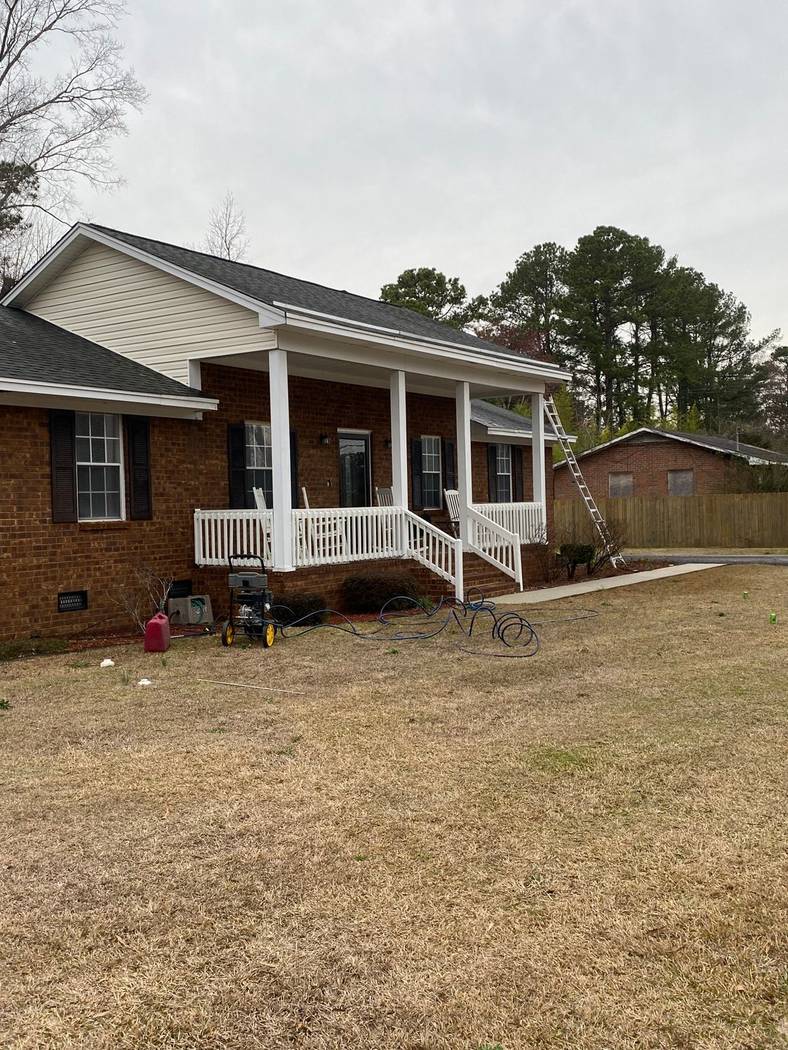
Pressure Washing Leaf Tannin Stains from Concrete in Pamplico, SC: Why Fall Timing Is Everything
Pressure washing leaf tannin stains from concrete in Pamplico, SC is one of those seasonal jobs where timing determines whether you get a clean slab or a permanent ghost stain, and right now, if oak trees overhang your driveway, sidewalk, or patio, the clock is already running.
- Wet oak leaves release tannins that soak into concrete pores and bond chemically, making the stain harder to remove the longer it sits.
- Timing matters more than pressure: catching tannin stains before they oxidize and cure into the surface is the difference between a straightforward wash and a stubborn problem.
- The surface decides the method, concrete driveways and sidewalks can handle hot-water pressure washing, while older or decorative concrete calls for a gentler approach with a surface cleaner attachment.
- Pressure washing tannin stains off concrete is also the smart prep step if you are planning to seal or coat the surface afterward.
- Pamplico and the surrounding Pee Dee area sit under heavy oak canopy, which means fall leaf staining is a recurring seasonal maintenance issue, not a one-time event.
#Why Do Fallen Oak Leaves Stain Concrete, and Why Is Fall the Worst Time to Ignore It?
Oak leaves are high in tannins, the same class of organic compounds found in tree bark, red wine, and tea. When a dry leaf blows across concrete, not much happens. When a wet leaf sits, it bleeds. The tannins leach out with every rain and morning dew cycle, and because concrete is porous, those compounds migrate into the capillaries of the slab rather than staying on the surface.
Left alone through November and into December, the stain oxidizes. It shifts from a light tan or rust color to a darker, more stubborn brown. At that point you are no longer dealing with a stain that sits near the surface, you are dealing with one that has bonded deeper into the material. Getting it out then takes more passes, more chemistry, and sometimes a ghost of the stain remains regardless.
Acting in the fall, before the stain cures, is the right move. That is true whether you are doing the work yourself or bringing in someone from Lamar, SC to handle it.
#What Is Actually Happening Inside the Concrete?
Concrete looks solid, but at a microscopic level it is full of tiny pores and channels. Water moves through them freely, and so do dissolved organic compounds like tannins. When a wet leaf sits on a slab, the tannin-rich liquid wicks downward into those pores the same way coffee soaks into an unglazed tile.
Not all leaves stain equally. Oaks have some of the highest tannin concentrations of any common North American tree. Maple leaves cause far less staining. Pine needles introduce their own resins but behave differently. If you have water oaks, willow oaks, or live oaks over your concrete, common throughout the Pee Dee, you are dealing with the most tannic variety of the problem.
Once inside the concrete, tannins react with the calcium hydroxide naturally present in cured cement. That reaction produces compounds chemically similar to natural dyes. The stain is not sitting on top of the surface waiting to be scraped off, it has become part of the surface in the shallow layer. That is what makes early treatment so important, and it explains why a garden hose does almost nothing while professional pressure washing in South Carolina can work when the timing is right.
#Does Pressure Washing Actually Remove Tannin Stains from Concrete?
Yes, pressure washing removes tannin stains from concrete effectively when the stain is caught before it fully oxidizes and cures deep into the slab. The mechanical force of the water, delivered at the right pressure, angle, and distance, physically scours the stained layer out of the surface pores. Hot water, when available, accelerates the process by opening the pores and helping lift organic compounds that cold water alone would leave behind.
Technique details matter. A standard pressure washer pointed straight down at high pressure can etch concrete or push the stain deeper rather than lifting it. Surface cleaner attachments, the spinning disc-style heads that maintain consistent distance and overlap, tend to produce more even results on flat concrete without the streaking a wand alone produces.
| Approach | Best For | Limitations | Notes on Tannin Stains |
|---|---|---|---|
| Cold water pressure washing with surface cleaner | Fresh stains caught within a few weeks of falling | Less effective on stains that have had time to oxidize | Good starting point; reduce streaking with consistent overlap |
| Hot water pressure washing | Older or deeper tannin stains on standard concrete | Requires commercial hot-water equipment; not suitable for all decorative finishes | Opens pores and lifts bonded organic compounds more effectively than cold water |
| Pre-treatment with alkaline or oxidizing cleaner plus pressure washing | Set stains that have been sitting since early fall or longer | Requires correct product selection and dwell time; risk of surface discoloration if misapplied | The chemical pre-treatment breaks the tannin bond before the mechanical wash lifts it out |
#What Can You Do Before Calling Anyone?
A few things are worth checking and doing yourself before deciding whether this is a professional job or a manageable DIY situation.
- Get the leaves off the concrete as soon as possible after they fall. Dry leaves cause almost no staining. Wet leaves sitting for even a few days start the tannin transfer.
- Look at the stain color. Light tan or rust that appeared recently is in a much better position than dark brown staining from leaves that sat all of October. The darker and more uniform the stain, the deeper it has likely penetrated.
- Run water over the stained area and watch what happens. If the stain lightens noticeably when wet, it has not fully bonded yet and will respond well to pressure washing. If it looks the same wet or dry, the tannin has oxidized further into the slab.
- Try a small section with a consumer-grade pressure washer if you have one. If it is moving the stain, keep going. If after multiple passes nothing is changing, the stain is set enough that you need more pressure, hot water, or a chemical pre-treatment.
The American Concrete Institute categorizes organic stains on concrete as generally among the more treatable types when addressed early, because they sit in the surface layer rather than reacting with the concrete matrix the way rust or oil can. That means timing is your biggest variable, and fall is when that variable is working in your favor.
#Is This Worth Doing Before Winter, or Can It Wait Until Spring?
Waiting until spring costs you. Every freeze-thaw cycle through a South Carolina winter, and the Pee Dee gets enough cold snaps to matter, works the tannin compounds deeper into the concrete pores