Rental Turnover Cleaning and Painting: How to Get a Unit Ready Between Tenants Without Replacing Everything
If you own rental property in Florence, Hartsville, Sumter, or anywhere else in the Pee Dee, rental turnover cleaning and painting is one of the most controllable costs in your operation, yet most landlords overspend on it. Every week a unit sits empty is money out of your pocket. The pressure to move fast is real. But moving fast in the wrong order, or replacing things you could have refinished, is how landlords end up overspending on every single turnover.
This post is about doing it smarter: specifically, the order work should happen and when refinishing beats replacing outright.
Should You Replace That Surface, or Can You Refinish It?
Refinishing almost always costs less than replacing, and in a rental context it usually produces a result that is more than good enough to attract a solid tenant. The surface decides the method, and most landlords are surprised by how much is genuinely salvageable when someone looks at it with fresh eyes and the right tools.
Here is a quick comparison of common rental surfaces and the realistic options for each:
| Surface | Replace | Refinish or Restore | When to Choose Which |
|---|---|---|---|
| Interior walls | Rarely necessary | Repaint with quality flat or eggshell | Refinish unless drywall is structurally damaged |
| Exterior siding or trim | Only if rotted or missing | Soft wash, then repaint | Refinish unless wood is compromised |
| Wood deck or porch | Replace damaged boards only | Pressure wash, sand, restain | Refinish if structure is sound |
| Concrete or masonry floors | Rarely | Pressure wash, reseal or paint | Almost always refinish |
| Bathroom tile and grout | If cracked or loose | Pressure wash or scrub, regrout if needed | Refinish unless tile is failing |
| Cabinets | Only if boxes are broken | Clean, sand, repaint with semi-gloss | Refinish in almost every case |
The pattern is consistent: replacement is rarely the right first move. Surfaces that look bad after a tenant leaves usually look bad because of surface-level buildup, scuffs, and old paint. Those problems respond well to cleaning and refinishing. Structural problems are a different conversation, but they are also less common than most landlords expect.
What Order Should the Work Happen In?
Getting the sequence right is just as important as deciding what to do. If you paint before you clean, you may trap odors and grease under fresh paint, and adhesion suffers. If you restain a deck before you fix the boards that need replacing, you do the work twice. Order matters.
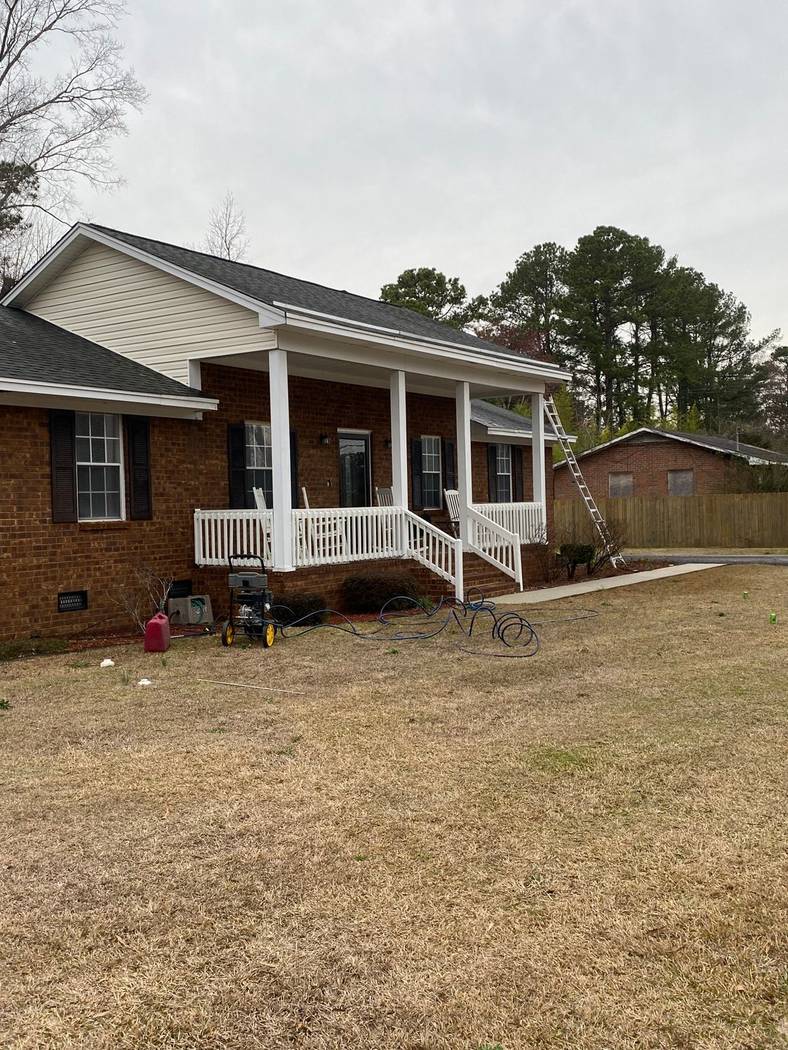
Start with cleaning. On the exterior, that means pressure washing the siding, porch, driveway, and any concrete surfaces. Washing is the prep step for painting, and it is also diagnostic. Once a surface is clean, you can see what is actually wrong with it versus what was just dirty. Mold, peeling paint, soft wood, and cracks all show up clearly once the grime is off. In our experience working around Lamar, SC and the broader Pee Dee region, landlords who skip this step often end up painting over problems that come back within a season.
For siding that is older or more delicate, soft washing is the appropriate method, lower pressure, surfactant-based cleaning that kills mold and algae at the source rather than just blasting the surface. The right method depends on the material, and choosing wrong can cause damage that adds cost instead of reducing it.
After cleaning, do any structural repairs. Replace rotted boards, patch drywall, fix trim that is pulling away. This step happens before any finish work because you do not want to paint or stain something you are about to nail, cut, or sand.
Then comes the finish work: interior painting, exterior painting, deck staining, cabinet repainting. This is where the unit goes from looking rough to looking fresh and move-in ready. According to the U.S. Department of Housing and Urban Development's Healthy Homes program, paint condition is one of the most commonly cited factors in habitability and health assessments, another reason to treat this step seriously rather than just rolling a quick coat over a dirty wall.
Handyman work that does not involve painting can often run parallel to finish work, but anything that involves drilling or cutting near a freshly painted wall should happen before the final coat. Small items like switch plate covers, door hardware, and fixture replacements are easy to do after painting without causing damage.
Finally, do a walkthrough with fresh eyes and a checklist. Look at the unit the way a new tenant would. At that point you are catching small things, not reordering the whole process.
The landlords who keep turnover costs under control are not the ones who cut corners. They are the ones who do the right things in the right order, and who understand that refinishing what is already there is almost always the better economic decision. Serving the Pee Dee since 2014, we work with residential and commercial property owners on exactly this kind of work.
If you are getting a rental ready between tenants and want to talk through what the exterior or interior actually needs, give Make It Happen Pressure Washing LLC a call or send a message. We are based in Lamar, SC and work throughout the region.