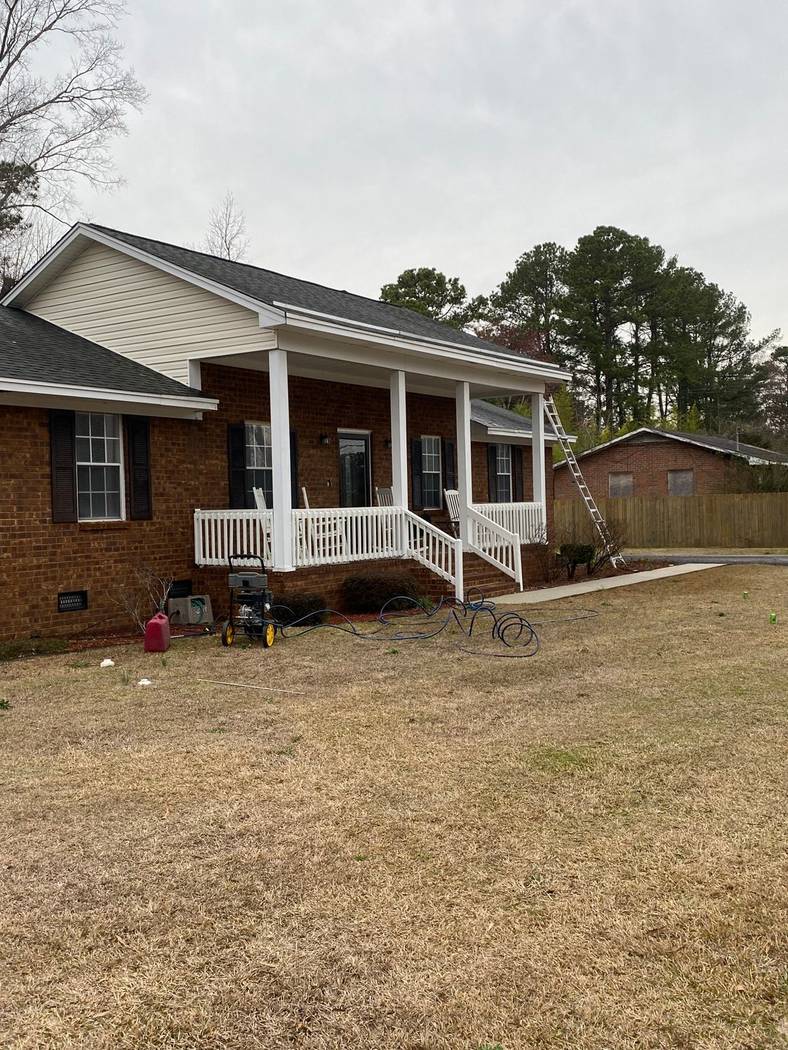
Soft Wash Home Exterior This Fall in Lamar, SC, Before Mold Wins the Season
- Fall in Lamar, SC creates the exact conditions mold and algae need to establish a foothold before winter, making it the right time to act.
- Soft washing uses low pressure and biodegradable cleaning agents to kill biological growth at the root, not just rinse it off the surface.
- Treating mold and algae before dormant season interrupts the growth cycle and slows spring recolonization significantly.
- The surface decides the method, soft washing protects siding, stucco, and painted wood that high-pressure washing can damage.
- If exterior painting is in your plans, washing is the prep step for painting, and fall is the right time to do both.
Scheduling a soft wash home exterior service this fall in Lamar, SC is one of the most effective things you can do to interrupt a biological growth cycle that compounds year over year if left alone. Most people think of mold and algae as a spring-and-summer problem. The logic seems right: warm weather, rain, humidity. But in the Pee Dee region, the story changes in October and November. Summer dries things out. Leaves fall and shade surfaces that spent months in direct sun. Temperatures cool into that mid-range zone where mold and algae actually thrive. The biology is not dramatic, it is slow, steady, and invisible until it is not.
By the time you see green or black streaking on the north side of your house, the growth has been there for weeks. It is already anchored. Waiting until spring means giving it an entire dormant season to harden in place and spread further once temperatures climb again.
#What Is Soft Washing and How Does It Work on a Home Exterior?
Soft washing delivers cleaning solution at low pressure, typically well under 500 PSI, and lets the chemistry do the work instead of the water force. The active ingredients in a soft wash mix are designed to penetrate the cell walls of mold, mildew, algae, and lichen and break them down. The rinse that follows removes dead organic material. Learn more about how this process works on our soft washing service page.
High-pressure washing blasts visible growth off the surface. It looks clean when it is done. But if the root structure is still there, and with algae and mold, there often is a root-like holdfast embedded in the substrate, regrowth comes back faster than it would have otherwise. You have removed the visible layer and disturbed the surface without eliminating the organism.
Vinyl siding, painted wood, stucco, EIFS, and fiber cement are all surfaces where high pressure can cause real damage, lifted panels, cracked joints, forced water behind the cladding. Soft washing is the method that matches those materials. It cleans without risk to the substrate.
According to the U.S. Environmental Protection Agency, mold requires moisture, a food source, and a surface to grow on, and it will grow on virtually any building material when those conditions exist. Understanding that helps explain why treatment, not just rinsing, is what actually addresses the problem.
#Why Do Fall Conditions in Lamar, SC Favor Mold and Algae Colonization?
Cooling temperatures between roughly 40 and 80 degrees Fahrenheit are ideal for mold and algae growth, and Lamar, SC sits in that range for most of the fall. The intense summer heat that slows some biological growth on south- and west-facing walls fades. Deciduous trees drop their leaves and suddenly shade areas of your home that had been drying out naturally all summer.
Dew is another factor. Fall mornings in the Pee Dee bring heavy dew that settles on siding and sits longer as morning sun arrives later and with less intensity. That extended damp period is exactly what spores need to germinate and anchor. It does not take standing water. It takes consistent surface moisture, and fall delivers it every morning for months.
| Factor | Fall Treatment (Oct-Nov) | Spring Treatment (Mar-Apr) |
|---|---|---|
| Growth stage at time of treatment | Early colonization, easier to break the cycle | Established growth after a full dormant season |
| Effect on winter dormancy | Growth killed before it hardens and spreads | Growth has already hardened through winter |
| Spring recolonization risk | Lower, organism cycle interrupted | Higher, root structures may survive treatment |
| Suitability for exterior painting | Good, surface is clean heading into slower season | Delays painting if growth is heavy at project start |
#Does a Soft Wash Treatment Actually Stop Mold From Coming Back?
A soft wash treatment does not make a surface permanently mold-proof, but it does interrupt the reproductive cycle in a way that pressure washing alone does not. When the organism is killed at the cellular level rather than dislodged from the surface, regrowth takes longer. The surface is not hospitable to the spores that settle on it in the weeks after treatment because the existing colony is no longer present to support rapid expansion.
How long that lasts depends on the surface material, the amount of shade, local moisture patterns, and whether there are trees or organic debris close to the house. North-facing walls in heavy shade recolonize faster than open south-facing walls. That is not a reason to skip treatment, it is a reason to stay ahead of it rather than waiting until growth is visible and established.
If you are planning to paint exterior siding or trim, washing is the prep step, there is no shortcut around it. Biological growth and surface contamination prevent paint from bonding properly, and any growth left under a coat of paint will continue to grow underneath it. Fall soft washing sets up a clean, sound surface for exterior painting on a schedule that makes sense for your project.
#What Should You Look for Before Calling for a Soft Wash?
Walk the perimeter of your house and look at each wall face separately. North-facing and shaded walls will almost always show growth first. Look for:
- Green or gray-green streaking, often starting near the roofline or under eaves
- Black streaking on lighter siding, this is usually a hardy algae called Gloeocapsa magma, common throughout the Southeast
- Dark staining that seems to run with water drainage patterns
- A chalky or rough texture that was not there before on smooth surfaces
- Any areas where caulk joints have darkened unevenly
If you see these signs in October or November, you are catching it at a good time. If they have been there through summer and you are just noticing them now, treatment is still worthwhile, growth that has established is harder to clear, but treating it before winter is still better than waiting through an entire cold season.
Make It Happen Pressure Washing LLC has been serving the P