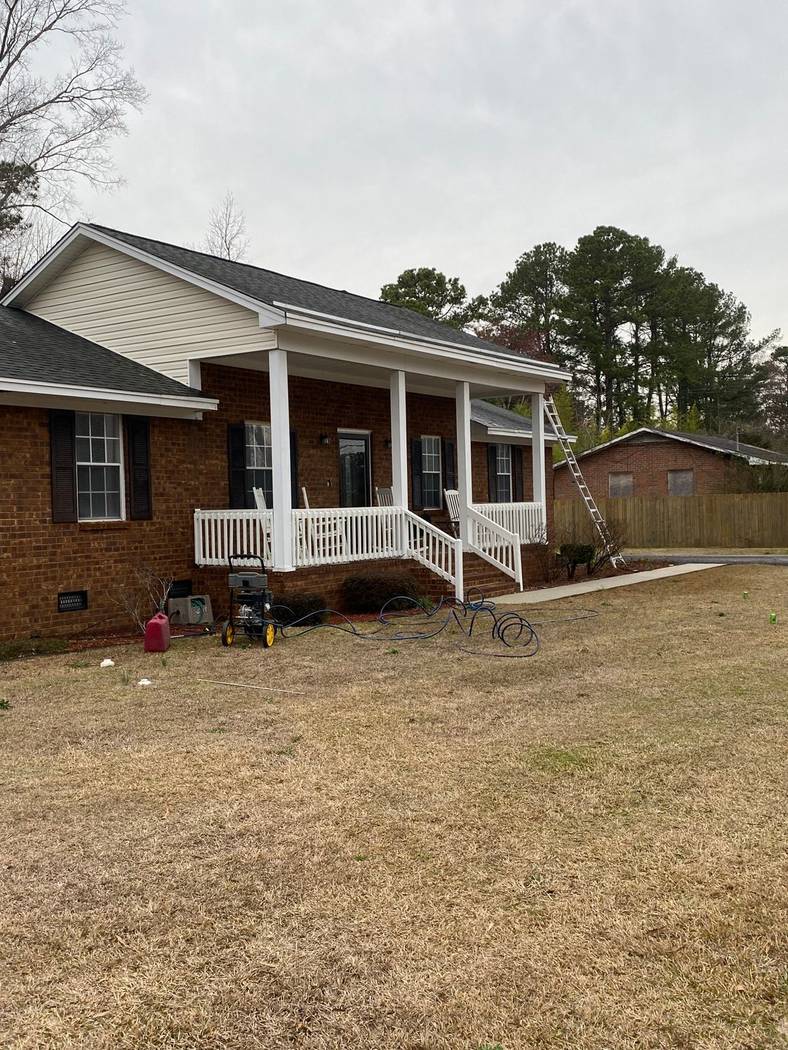
Soft Washing a Mobile Home in Fall Near Marion, SC: Why Mold Is a Different Problem Than It Looks
- Mobile home siding materials -- vinyl, aluminum, and hardboard -- are especially vulnerable to mold in fall because they stay damp longer than site-built construction.
- Soft washing uses low pressure and a cleaning solution to kill mold at the root, which prevents it from coming back as fast as pressure washing alone would allow.
- High-pressure washing on mobile home panels risks denting aluminum, warping vinyl, and driving water behind the siding where it causes bigger problems than the mold did.
- Fall is the right time to wash a mobile home exterior because mold that sits through winter feeds on the siding all season long and is harder to remove by spring.
- Make It Happen Pressure Washing LLC serves the Marion, SC area out of Lamar, SC and handles soft washing for both residential and commercial properties.
If you are searching for soft washing for a mobile home this fall in Marion, SC, the timing is right -- and the method matters more than most homeowners expect. Walk around your mobile home in October and you may notice the south or north wall has gone gray-green. Maybe it started as a thin film near the roofline and now it has crept down to the bottom panel. That discoloration is not just dirt. It is living mold and algae, and it is eating your siding.
Mobile homes in Marion, SC and the surrounding Pee Dee region sit in a climate that mold genuinely loves. Hot, humid summers give spores a running start, and then fall brings exactly the conditions that let colonies dig in: cooler nights, morning dew that lingers on shaded walls, and falling leaves that hold moisture against the panels for days at a time. By the time most homeowners notice the problem, the growth is already well established.
The material under that mold is what makes this a situation worth handling carefully. Mobile home exteriors are not built like site-built homes, and the method that works fine on brick or fiber cement can do real damage here.
#What Makes Mobile Home Siding Different From Site-Built Homes?
Mobile home exterior panels are thinner, lighter, and less forgiving than what you find on most stick-built houses. There are three common materials, and each one has its own weakness when water or pressure is applied incorrectly.
| Siding Type | Typical Thickness | Main Risk From High Pressure | How Soft Washing Addresses It |
|---|---|---|---|
| Vinyl (thin-gauge) | Thinner than residential vinyl | Warping, cracking, or lifting at seams | Low-pressure rinse keeps panels flat and seams sealed |
| Aluminum | Light-gauge sheet | Denting, surface oxidation damage | Chemical solution does the cleaning; pressure is minimal |
| Hardboard (Masonite-style) | Varies, often thin composite | Water intrusion, swelling, delamination | Controlled application prevents saturation behind panels |
Beyond thickness, mobile home walls have less backing behind the outer skin. On a site-built home, there is typically a layer of sheathing, house wrap, and insulation between the siding and the interior. On many mobile homes, the gap between the panel and the living space is much smaller. Water forced behind the siding under high pressure does not just sit in a wall cavity -- it can reach interior surfaces quickly. Our soft washing service is specifically calibrated to avoid that outcome on thin-panel construction.
#Why Does Mold Grow So Fast on Mobile Home Exteriors in Fall?
Mold accelerates on mobile home panels in autumn for a few reasons that compound each other. First, the panels themselves do not retain heat the way masonry or thicker siding does. When the temperature drops at night, thin aluminum or vinyl cools fast, and morning condensation forms on the outer surface. That moisture does not evaporate quickly on shaded walls, so the panel stays damp for hours each morning.
According to the U.S. Environmental Protection Agency's mold guidance, mold needs only moisture and an organic food source to grow. The surface coating on aged siding -- including oxidized paint and chalking aluminum finish -- gives mold exactly that food source once it is wet often enough.
Second, mobile homes are often set lower to the ground than site-built homes. That means less airflow under the structure and along the lower panels. Leaves and debris collect against the skirting and the bottom course of siding, staying wet long after a rain. Mold at the base of the wall is extremely common for this reason, and it works its way upward over time.
Third, the paint or factory finish on older mobile home siding weathers more quickly than thick residential paint systems. Once that protective layer gets thin, the bare substrate underneath is far more porous and holds moisture in. Mold does not just sit on top of a chalky or worn surface -- it gets into it.
#What Does Soft Washing Actually Do That Pressure Washing Does Not?
Soft washing removes mold by killing it, not just rinsing it off the surface. That distinction matters a lot for how long the results last.
A standard pressure wash on a mobile home throws high-velocity water at the surface. It knocks visible growth off the panel, but it leaves behind the root structure of the mold -- called hyphae -- embedded in the surface. Within a few weeks, especially through the damp of a Pee Dee winter, that growth comes back. And every time high pressure is used on thin aluminum or light vinyl, you risk denting, lifting seams, or forcing water behind the wall.
Soft washing applies a low-pressure stream carrying a cleaning solution -- typically a sodium hypochlorite blend formulated for exterior surfaces -- that penetrates the mold colony and breaks it down at the biological level. The surface decides the method here, and mobile home panels consistently call for low pressure and let the chemistry do the work. For a broader look at how this compares to other methods used across the state, see our overview of pressure washing in South Carolina.
- The rinse pressure used in soft washing is low enough to clean without stressing thin panels.
- The solution neutralizes algae, mold, mildew, and bacteria rather than pushing them elsewhere.
- Results last longer because the organism is dead, not just displaced.
- No denting of aluminum, no warping of thin vinyl, no water driven behind the panels.
#Is Fall the Right Time to Wash a Mobile Home Exterior?
Yes, and acting before winter is the practical choice. Mold that sits on a mobile home exterior through the cold months does not go dormant the way you might hope. Growth slows, but the colony stays attached and keeps working on the surface chemistry of the panel. By the time spring arrives and temperatures warm back up, the mold has had months of contact time with the siding and is that much harder to remove cleanly.
Washing in the fall also matters if you are thinking about exterior painting. Washing is the prep step for painting, full stop. No paint job applied over mold, algae, or chalking oxidation is going to hold. If you want to refresh the paint on your mobile home this fall or plan to do it next spring, getting the surface clean now keeps that option open. A washed surface that sits through winter is still in far better shape for exterior painting than one covered in mold going into the season.
Make It Happen Pressure Washing LLC has been serving the Pee Dee since 2014, working with residential and commercial properties both, and the fall schedule for exterior washing tends to fill up as homeowners realize this is the right window. Marion, SC and the communities nearby -- including clients who find us through Lamar, SC -- see the same seasonal pattern every year.
Walk the perimeter of your mobile home and look at the walls on the side that gets the least direct sun. Run your hand along the lower panels. If the surface feels slimy or the color looks uneven with gray or green streaks, that is active growth and it is ready to be treated. If the surface just looks dusty or faded with no slick feel, that may be oxidation from aging paint rather than mold -- a different problem that washing alone will not fix, but one worth knowing about before you start.
#What Should You Expect During a Soft Wash on a Mobile Home?
The process is straightforward. Doors and windows get checked to make sure they are closed. Any plants or shrubs close to the foundation that might catch runoff get a pre-rinse with plain water so the cleaning solution does not sit on them. Then the solution is applied to the siding at low pressure, starting from the bottom and working up to avoid streaking.
The solution dwells on the surface for several minutes. You can actually watch the mold change color as it dies -- that gray-green shifts toward brown or white as the biology breaks down. Then the wall is rinsed at low pressure from the top down.
On aluminum panels, a good technician will check for any existing dents or open seams before starting, because those are spots where water can get behind the skin. On hardboard panels, the goal is a thorough clean without saturation -- enough time for the solution to work, not so much rinse water that it drives moisture into compromised edges. The surface decides the method, every time.
#Common Questions
Will soft washing damage the existing paint on my mobile home?
A properly mixed soft wash solution applied at low pressure will not lift sound paint from a mobile home exterior. Paint that is already peeling, bubbling, or severely chalked may show more visible deterioration after washing -- but that deterioration was already there, and washing just makes it visible by removing the mold that was masking it. If your paint is in rough shape, that is useful information to have before deciding whether to repaint.
How often should a mobile home exterior be soft washed?
In the Pee Dee climate, most mobile home exteriors benefit from washing every one to two years, with shaded walls sometimes needing attention more frequently. Homes set under trees or in areas with poor airflow around the foundation will accumulate mold faster than homes on open lots. A yearly fall wash is a reasonable routine if the home is in a shaded or low-lying location.
Can I soft wash a mobile home myself with a garden sprayer?
You can apply a diluted cleaning solution with a garden sprayer, and for a small patch of mold it may be enough. The practical limitations are solution strength, even coverage on higher panels, and safe handling of sodium hypochlorite blends. For a full exterior with significant mold coverage, the results from a professionally mixed and applied soft wash are more consistent and the mold stays away longer because the concentration and dwell time are controlled properly.
Is soft washing the same as power washing?
Soft washing and power washing are different methods. Power washing uses high pressure -- sometimes very high -- to physically remove surface contamination. Soft washing uses low pressure and relies on the cleaning solution to do the biological work of killing mold and algae. On mobile home siding, the distinction matters because the panels cannot handle the same pressure that brick or concrete can.
If your mobile home in the Marion, SC area has mold on the exterior heading into winter, Make It Happen Pressure Washing LLC is worth a call. We are based in Lamar, SC and we know the surfaces and the climate. You can reach us through the contact page on this site to talk through what you are seeing and figure out the right approach.