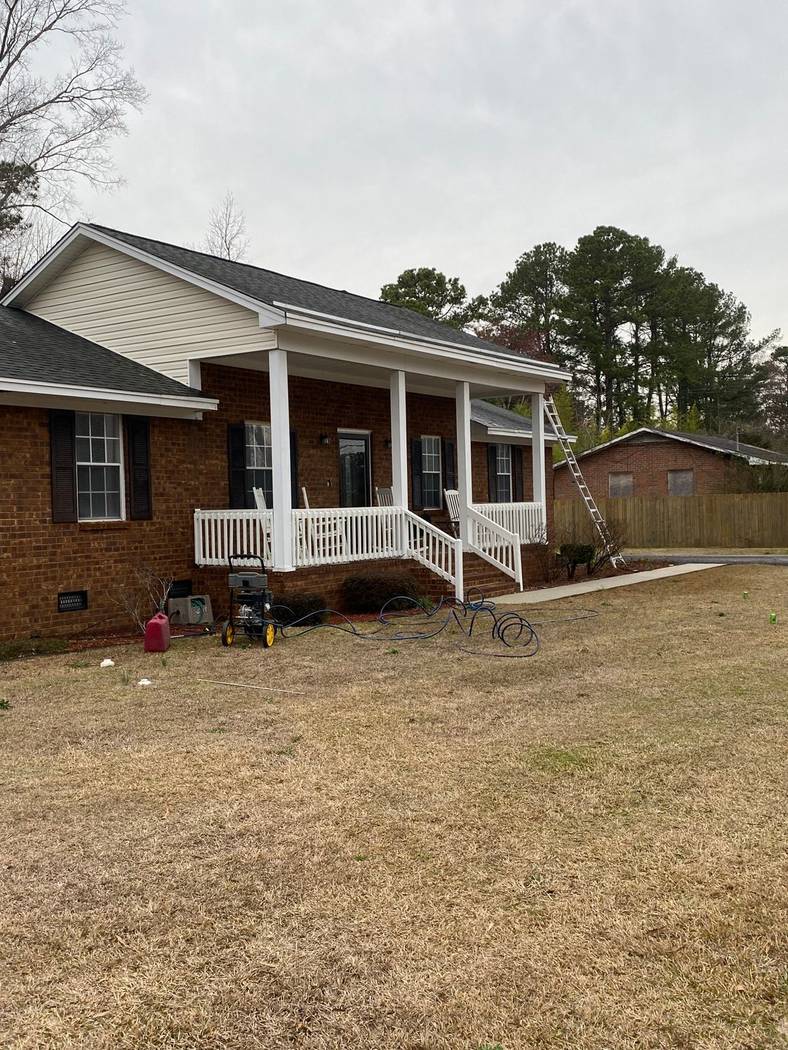
Why Fall Deck Cleaning and Staining in Florence, SC Is the Move Your Deck Actually Needs
If you have a wood deck and you're searching for deck cleaning and staining in fall in Florence, SC, you're already ahead of most homeowners, because fall is the season that actually decides how your deck looks and holds up for the next couple of years. Most people think of spring as cleaning season, but the combination of things that happen to a wood surface between September and November is the reason decks that looked fine in August are suddenly slick, gray, and splotchy by Thanksgiving.
This is not about neglect. It is about what South Carolina fall weather does to wood whether you are watching it or not. Understanding that process makes it easier to time your cleaning and staining so the work actually sticks.
#What Does Fall Moisture Actually Do to a Wood Deck?
Fall moisture feeds algae in three ways that stack on each other, and all three show up together in the Pee Dee region starting around late September.
First, cooling overnight temperatures cause moisture in the air to condense on surfaces. That morning dew sits on horizontal deck boards for hours before the sun burns it off, if it burns it off at all on a cloudy fall day. Wood is porous, and that standing surface moisture works its way in.
Walk out on your deck on any October morning around 7 or 8 a.m. If the boards look darker than they did the night before, that is condensation the wood has already started pulling in. Do this a few mornings in a row and you will see the pattern.
Second, falling leaves land on the deck and hold that moisture against the wood surface rather than letting it evaporate. A layer of wet leaves on a deck board is essentially a compress, it keeps the wood damp for extended periods, and damp wood is where algae, mold, and mildew establish themselves. Once the biology gets a foothold, it spreads laterally across the surface even after the leaves are cleared.
Third, lower UV exposure in fall means less natural disinfecting. Summer sun is harsh on organic growth. Fall sun, angled low and often blocked by cloud cover, does not provide the same check. Whatever starts growing in October has very little to slow it down until the following spring.
#Is Algae on a Deck Just a Cosmetic Problem?
Algae does real structural damage to wood, and the cosmetic sign you can see is usually lagging behind the damage underneath it. The greenish or grayish film you notice on deck boards is the visible output of organisms that are feeding on the wood fiber itself. According to the USDA Forest Service, biological growth including algae and mold accelerates the weathering and degradation of unprotected wood surfaces by keeping moisture levels elevated over extended periods.
Beyond the structural side, algae and mold close off the wood pores that stain needs to penetrate. A deck board that looks clean on top but carries a thin biological film will reject stain the same way a waxed surface rejects water. The stain sits on top, does not bond, and peels within a season. That is why washing is the prep step for staining, and why the quality of the wash matters as much as the quality of the product going on after it. The right pressure washing approach for South Carolina removes that biological layer properly rather than just moving surface debris around.
#How Does Fall Affect Staining Timing in Florence, SC?
The fall window is genuinely useful for staining, but it is narrower than people expect. October and most of November work well in the Florence area. December gets risky because most deck stains and sealers need air temperatures above 50 degrees Fahrenheit and a dry surface for proper curing, conditions that become less reliable as winter approaches.
| Timing | Typical Conditions | Staining Suitability |
|---|---|---|
| Early to mid-October | Warm days, cool nights, moderate dew, leaves beginning to fall | Good, adequate curing temps, lower humidity than summer |
| Late October to mid-November | Cooler days, heavier dew, significant leaf drop | Workable with proper prep and dry weather window |
| Late November to December | Temperatures increasingly unreliable, wet periods common | Risky, curing can be compromised; better to wait for spring |
| January to February | Cold, intermittently wet, low UV | Not recommended for most stain and sealer products |
The surface decides the method and the timeline both. A deck that went all summer without a coat has different needs than one that was stained two years ago and just needs a maintenance wash and refresh. Looking at the wood, its color, how it accepts water, whether the grain is raised, tells you more than the calendar does. For decks with heavier biological buildup or more delicate wood conditions, soft washing is worth understanding as an alternative to high-pressure rinsing, since it cleans without forcing water deeper into already-stressed grain.
#What Can a Homeowner Check Before Calling Anyone?
There are a few things worth doing yourself before scheduling any cleaning or staining work. These checks save time and help you have a more useful conversation about what the deck actually needs.
- The water bead test: Sprinkle a small amount of water on the deck boards. If it beads up, the existing coating is still doing something and the wood may not need a full recoat yet. If the water soaks in within a minute or two, the wood is open and ready for stain, after a proper wash.
- The discoloration check: Look at the boards in morning light. Green or gray patches, especially in shaded spots or near the house wall, are biological growth. Black streaking near joints or between boards is usually mold. Both need to be killed and lifted before any stain goes on.
- The scratch test: Take a fingernail or coin to an inconspicuous spot. If existing finish flakes off easily, adhesion has already failed and the surface needs stripping before recoating.
- Leaf and debris check: If the deck still has leaf cover on it, clear it and wait a few dry days before any evaluation. What is under the leaves is often worse than the surrounding boards, but it needs to dry before you can assess it accurately.
Gray coloring across a deck surface without green or black patches is usually UV weathering rather than active biological growth. It looks rough but it is not damaging the wood right now. A good cleaning and stain will restore the appearance, but if staining has to wait until spring, gray weathering alone is not a reason to panic.