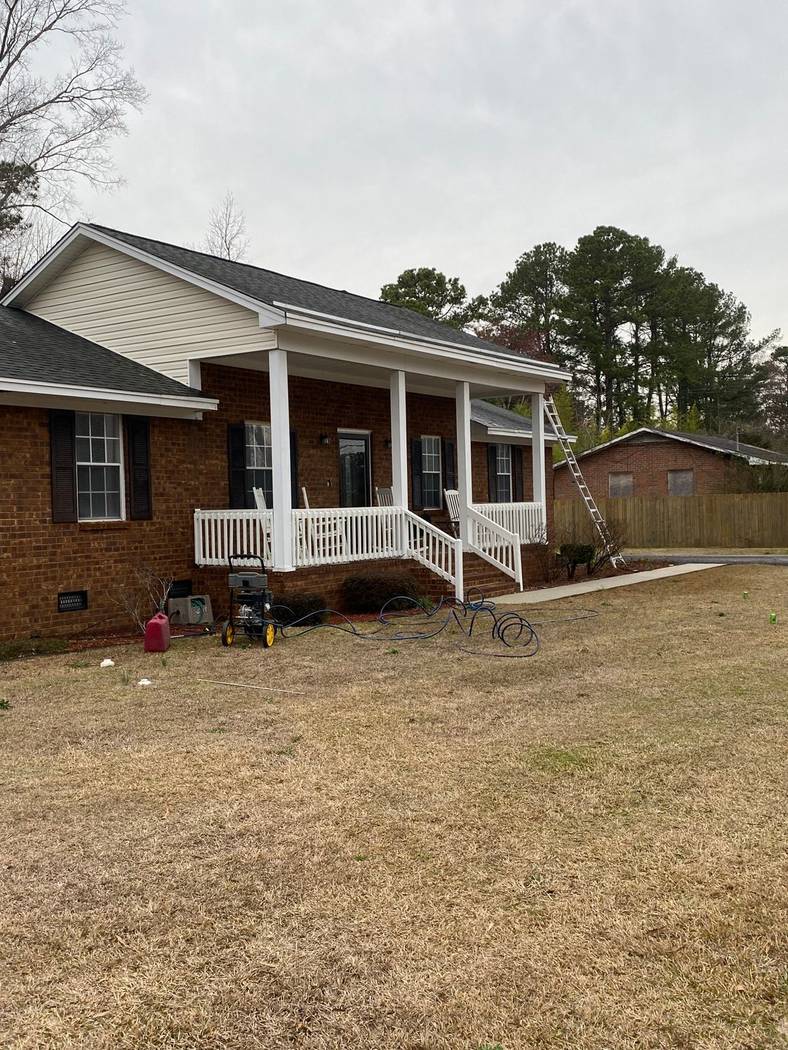
Why House Washing in Fall in Lamar, SC Protects Your Siding All Winter Long
- Decomposing leaves trap moisture against siding for days at a time, creating the exact conditions mold and mildew need to take hold before winter arrives.
- Fall is the right time for house washing in Lamar, SC because you are removing biological material before it sits through months of cold, damp weather.
- Soft washing is the preferred method for most siding types because it kills the organism rather than just rinsing away the visible stain.
- Washing is the prep step for painting, so if you are planning any exterior work next spring, a clean surface now protects that investment.
- You can check your own siding in about ten minutes to judge whether the problem is surface-level or something that has worked into the material.
#Why Fall Leaves Are Harder on Your Siding Than You Think
House washing in fall in Lamar, SC matters most because of what happens after the leaves drop. A wet leaf mat packed against the base of your siding can hold moisture against a surface for days after the rain stops, long after the rest of the yard has dried out. Repeat that through October and November and you have given mold exactly what it needs: a dark, damp, nutrient-rich environment pressed right up against your exterior walls.
This happens to houses all over Lamar, SC every fall, and most homeowners do not notice until spring when the black streaks are already visible. By then the biology has had several months to anchor itself into the siding material, which makes removal harder and the risk of surface damage during cleaning higher.
The fix is straightforward. A fall house washing removes the decomposing organic material and the mold spores that have already colonized the surface before they get that winter incubation period. It is one of the more cost-effective things you can do for a home exterior, and the timing genuinely matters.
#How Does Leaf Litter Actually Cause Mold Growth on Siding?
Decomposing leaves release tannins and organic acids as they break down. Those compounds feed fungal and algae growth while the physical mass of the leaf layer holds moisture against the surface underneath. Mold spores are present in outdoor air virtually everywhere, and according to the U.S. Environmental Protection Agency, they only need moisture and an organic food source to germinate and spread. Wet leaf debris delivers both.
Vinyl siding, wood siding, fiber cement, and stucco all behave differently, but they share one vulnerability: any surface that stays wet long enough will support biological growth. Vinyl may seem impervious, but it scratches and develops microscopic texture over time, and that is enough for mold to grip. Wood and fiber cement are more porous and the problem moves faster on those materials.
Mold on siding is rarely just cosmetic. Left long enough, it can work into caulk joints, wooden trim, and any area where siding meets a penetration like an outdoor outlet or hose bib. Those are the spots that lead to moisture problems inside the wall assembly.
The leaf piles that matter most are not the ones in the middle of your yard. They are the ones that blow against foundation plantings, collect in corners where two walls meet, or pile up along the bottom course of siding. Those are the spots worth checking first.
#What Does a Fall House Washing Actually Do?
A proper fall house wash does two things a leaf blower and a garden hose cannot: it removes the biological material at the organism level, and it treats the surface so regrowth is slower.
The surface decides the method. Most residential siding in Lamar, SC responds well to soft washing, which uses a low-pressure rinse combined with a cleaning solution that kills mold, mildew, algae, and bacteria rather than just blasting the visible residue off. High-pressure washing has its place on concrete, brick, and certain wood surfaces, but on vinyl or fiber cement it can drive water into joints and cause more problems than it solves.
| Siding Type | Soft Wash | High-Pressure Wash |
|---|---|---|
| Vinyl siding | Recommended, low risk of water intrusion, kills organisms | Can force water behind panels at joints |
| Fiber cement (Hardie board) | Recommended, manufacturer guidance favors low pressure | Can erode surface finish and void paint warranty |
| Painted wood siding | Good option, gentler on existing paint | Can lift paint edges and accelerate peeling |
| Brick and concrete block | Works well for biological stains | Acceptable at moderate pressure for heavier soil |
After washing, the cleaned surface dries faster and stays cleaner longer. The cleaning agents used in soft washing typically leave a residual that slows re-colonization, so you are not just removing what is visible today, you are buying the surface some protection going into the wet months ahead.
#Can You Wait Until Spring to Have This Done?
You can wait, but the mold will not. A spore that lands on damp siding in October and finds a food source does not go dormant in winter the way many homeowners assume. Growth slows in freezing temperatures, but Lamar, SC winters are mild enough that biological activity on exterior surfaces continues well into the cold season. By March you are looking at four to five months of establishment rather than a fresh outbreak.
There is also a practical reason to act in fall if you have any exterior painting or staining planned for next year. Washing is the prep step for painting. Putting fresh paint over siding that has mold underneath is one of the most common reasons exterior paint fails prematurely, with peeling or bubbling showing up within the first year or two. A clean surface going into winter means you are starting from a solid position when painting season arrives.
Run your hand along the lower two feet of your siding on the shadiest side of the house. If it feels slightly slick, chalky in a dark gray rather than white way, or if you can see a green or black tint, biological growth is already present. That is not a reason to panic, but it is a reason not to wait.
#How Do You Know If the Problem Is Already Serious?
Surface mold that has not penetrated the material is manageable. The warning signs that it has gone further are worth knowing before you call anyone, because they change the scope of what needs to happen.
- Black or green staining that returns within a few weeks of being rinsed off, this usually means the organism is living inside the surface, not just on it.
- Soft or spongy spots on wood siding or trim, which suggest moisture has been present long enough to begin affecting the substrate.
- Caulk that has separated from siding at joints, especially around windows and doors, because those gaps let water in behind the siding where it cannot dry out.
- A musty smell near an exterior wall