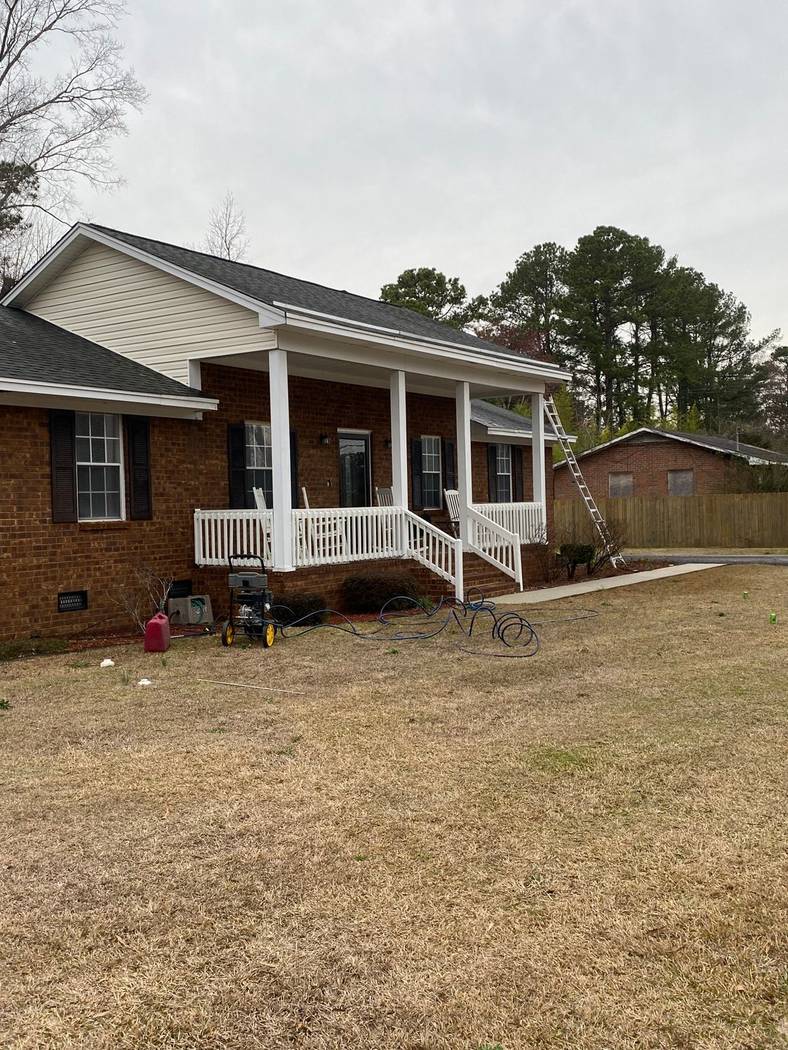
Why Pressure Washing Moss from a Brick Patio This Fall in Conway, SC Is Worth Doing Now
Pressure washing moss from a brick patio in fall is one of the most cost-effective things a Conway, SC homeowner can do before temperatures drop, and it matters far more than it looks. Right now, in late fall, that green fuzz on your brick patio looks like a cosmetic problem. It is not. Moss is a water-holding plant. Its root-like structures, called rhizoids, press directly into the porous surface of brick and mortar and keep moisture in contact with the masonry even between rain events. When overnight temperatures drop below freezing, that trapped moisture expands. Water expands by roughly nine percent when it turns to ice, according to the U.S. Geological Survey's Water Science School. That expansion does not happen in open air. It happens inside the tiny pores and gaps of your mortar joints, where it has nowhere to go but outward.
One freeze is not going to collapse your patio. But five or ten freeze-thaw cycles across a South Carolina winter will widen hairline gaps into visible cracks, and visible cracks in mortar let in more water, which creates more damage the following winter. The moss is not the root cause. It is the mechanism that keeps moisture in place long enough for freezing temperatures to do the work.
#What Does Moss Actually Do to Mortar Joints?
Moss accelerates mortar deterioration through two processes happening at the same time. The first is mechanical: rhizoids work into existing micro-cracks in the mortar surface, and as the plant grows, it physically widens those gaps. The second is chemical: decomposing organic matter produces mild acids that gradually break down the calcium compounds that give mortar its hardness. Neither process is fast on its own. Together, with freeze-thaw cycling added on top, they move considerably faster.
Run your finger along the mortar joints under a mossy patch. If the mortar feels soft, crumbly, or comes away in powder, freeze-thaw damage may already be underway. Firm, hard mortar means you are likely still ahead of the problem. That distinction matters because pressure washing is a cleaning step, it does not repair mortar that is already compromised. If you find soft joints, those need to be repointed before or alongside the cleaning.
#Is Fall Pressure Washing the Right Method for a Brick Patio?
Fall pressure washing is the right call for most brick patios because it removes the moss entirely before freeze-thaw cycles begin, which is the only window where you are truly getting ahead of the damage. Waiting until spring means the first several freeze cycles have already happened with a wet moss mat sitting on the surface.
The surface decides the method, though. Brick is harder than most people assume, but mortar is not. Old mortar, especially in patios that are twenty or thirty years old, can be softer than the brick itself. Blasting a weathered brick patio with a high-pressure surface cleaner the way you would treat a concrete driveway can erode mortar joints and create the very problem you were trying to prevent. The correct approach for brick is a lower operating pressure combined with a wider spray angle and, in many cases, a pre-treatment that loosens the moss chemically before the water does the mechanical work. That sequence protects the mortar while still pulling the moss out cleanly. In cases where mortar condition is a concern, soft washing, which relies on low pressure and a biodegradable chemical pre-treatment, is often the safer choice for getting the surface clean without stressing the joints.
| Option | Effectiveness on Moss | Risk to Mortar Joints | Timing Consideration |
|---|---|---|---|
| Professional pressure washing (low-pressure, pre-treat) | Removes plant, root mat, and surface spores | Low when set and angled correctly | Best done mid-to-late fall before first freeze |
| DIY garden hose scrub | Removes visible growth but leaves rhizoids and spores | Negligible | Buys a little time but moss returns quickly |
| Dry moss killer (no water removal) | Kills the plant but leaves the wet mat in place | None from application, but dead moss still traps moisture | Incomplete without follow-up washing |
| Do nothing, wait until spring | No removal | Multiple freeze cycles occur with moisture already present | Risk of mortar damage increases with each cold night |
#How Does the Actual Washing Process Work on Moss-Covered Brick?
A trained eye looks at the patio before anything gets wet. How old is the brick? What condition is the mortar in? Is this a dry-laid patio or does it have a mortar bed underneath? Those details change the pressure setting and the choice of any pre-treatment chemistry.
For most residential brick patios with healthy mortar, the process goes in this order: apply a biodegradable moss treatment and let it dwell for several minutes, then work across the surface with a lower-pressure nozzle, keeping the wand moving and angled to push debris away from the joints rather than directly into them. The moss lifts in sheets once the root mat is broken. What is left behind is clean brick and intact mortar. The surface should be allowed to dry fully before any sealant is considered, though sealing is a separate conversation.
Serving the Pee Dee since 2014, we have cleaned brick patios from Lamar, SC out through the Conway area, and the pattern is consistent: the patios that get cleaned in October look fine come March. The ones that get skipped tend to show up in spring work orders that include mortar repair alongside the cleaning.
#Does This Apply to Commercial Properties in Conway Too?
Residential and commercial both deal with the same moss problem for the same physical reasons. A restaurant patio in Conway with a brick surface, a hotel courtyard, a retail walkway, all of them accumulate moss in shaded or low-drainage areas, and all of them are subject to the same freeze-thaw mechanics. Commercial properties often have additional reasons to act in fall: a mossy brick surface becomes slippery, and a slippery exterior walkway is a liability issue regardless of whether the mortar is at risk.
The washing process is the same; the scale and scheduling are different. Commercial pressure washing often needs to happen early morning or outside of business hours, which is a logistics question rather than a technical one. The cleaning itself follows the same rule: the surface decides the method, and brick with mortar joints always gets treated more carefully than bare concrete.
#What Happens If You Wait Until Spring?
Waiting is a real option, and it is worth being honest about it. If your mortar is in excellent condition and you only have light moss growth, you may come through a typical South Carolina winter without visible damage. The Pee Dee region does not see the same prolonged deep freezes that Mid-Atlantic or New England climates do, so the number of freeze-thaw cycles in any given winter is lower than it would be further north.
What changes the math is the quantity of moss, the age of the mortar, and how many winters of deferred cleaning have already accumulated. Heavy moss, old mortar, and a few prior winters of freeze cycles already in the bank, that combination is genuinely at risk. Light moss on a newer patio with solid mortar, that one can probably wait. The honest answer is to check the mortar yourself using the finger test described above. Hard and firm means you have time. Soft and powdery means fall is not early at all.
If you have a brick patio in the Conway or Lamar, SC area and you want to know where yours falls, give us a call or send a photo. We can tell you quickly whether this is urgent, whether it can wait, and what the cleaning process would actually look like for your surface.
#Common Questions
Will pressure washing damage my brick mortar joints?
It will not if the pressure is set correctly and the nozzle angle keeps water moving across the surface rather than directly into the joints. The risk comes from using too high a pressure or holding the wand too close on weathered mortar. A pre-treatment that loosens the moss chemically reduces the pressure needed to clear it, which protects the mortar in the process.
How do I know if my mortar is already damaged by freeze-thaw cycles?
Press firmly along the mortar joints with a finger or a key. Mortar in good condition feels hard and does not crumble. If it feels soft, releases powder, or has visible gaps wider than a hairline, the freeze-thaw process has likely already started working. That condition calls for repointing, which is separate from and should happen before or alongside any pressure washing.
Can moss come back after pressure washing?
Yes, moss can return, especially in shaded, low-drainage areas where conditions favor it. Washing removes the existing plant and its root mat along with surface spores, which typically sets regrowth back by a season or more. Improving drainage, trimming overhead shade, and staying current with annual or biennial cleaning are the practical ways to slow the return.
Is fall the only good time to pressure wash a brick patio?
Fall is the best time specifically because you are removing the moisture-holding moss before freeze-thaw cycles begin, which is the whole point of the preventive cleaning. Spring cleaning is still worthwhile, it clears what built up over winter, but it does not prevent the freeze damage that may have already occurred. Summer cleaning is fine for appearance but skips the window that matters most for mortar protection.